


TL;DR
- Attendance felt lighter, but the conversations were good, and IBM had a notable presence following its acquisition of Confluent.
- Session picks: Netflix's Kafka surge playbook, cross-cluster replication inside Kafka brokers, and governing an autonomous Kafka SRE agent.
- StreamHouse came up in several talks after the Streamhouse Working Group, which Aiven co-founded, published a vendor-neutral definition.
- Greg Harris's talk on adopting Diskless across an organisation was one of the best of the event.
Current conferences, including the regional editions and spinoffs, are important moments for the streaming community, bringing together committers to projects like Apache Kafka and Apache Flink with vendors and people building the streaming infrastructure that makes our world work. This year's events were no exception, with Current 2026 hosted in a great new venue at the Moscone Center in San Francisco.
Impressions
Attendance felt lighter than in previous years, though I don't have exact attendance numbers. It fits a pattern I've seen across tech conferences, and I put it down to tighter education budgets and people searching for broader AI-focused events to attend over those focused on specific technologies. IBM had a notable presence, with a host of IBMers attending talks and walking the expo floor, which made sense given IBM's acquisition of Confluent earlier this year. Absent at this event was the guerrilla marketing I've come to expect from Redpanda. This coincided with a change in the license from BSL to a new proprietary one, and I think it's likely this is due to change at the org and not a pulling back from the Kafka community. The vibe was still great, and there was no shortage of interesting conversations.
A few sessions caught my eye in this year's lineup. Netflix's Vinay Rayini shared a playbook for keeping Kafka resilient during traffic surges, while Federico Valeri and Luke Chen (who I previously interviewed for the Get Kafka-Nated podcast) looked at building cross-cluster replication into Kafka brokers, an interesting alternative to the operational overhead of MirrorMaker 2. Jeremy Frenay's session on governing an autonomous Kafka SRE agent tackled a practical question too: how do you give an agent enough access to help without letting it cause damage in production?
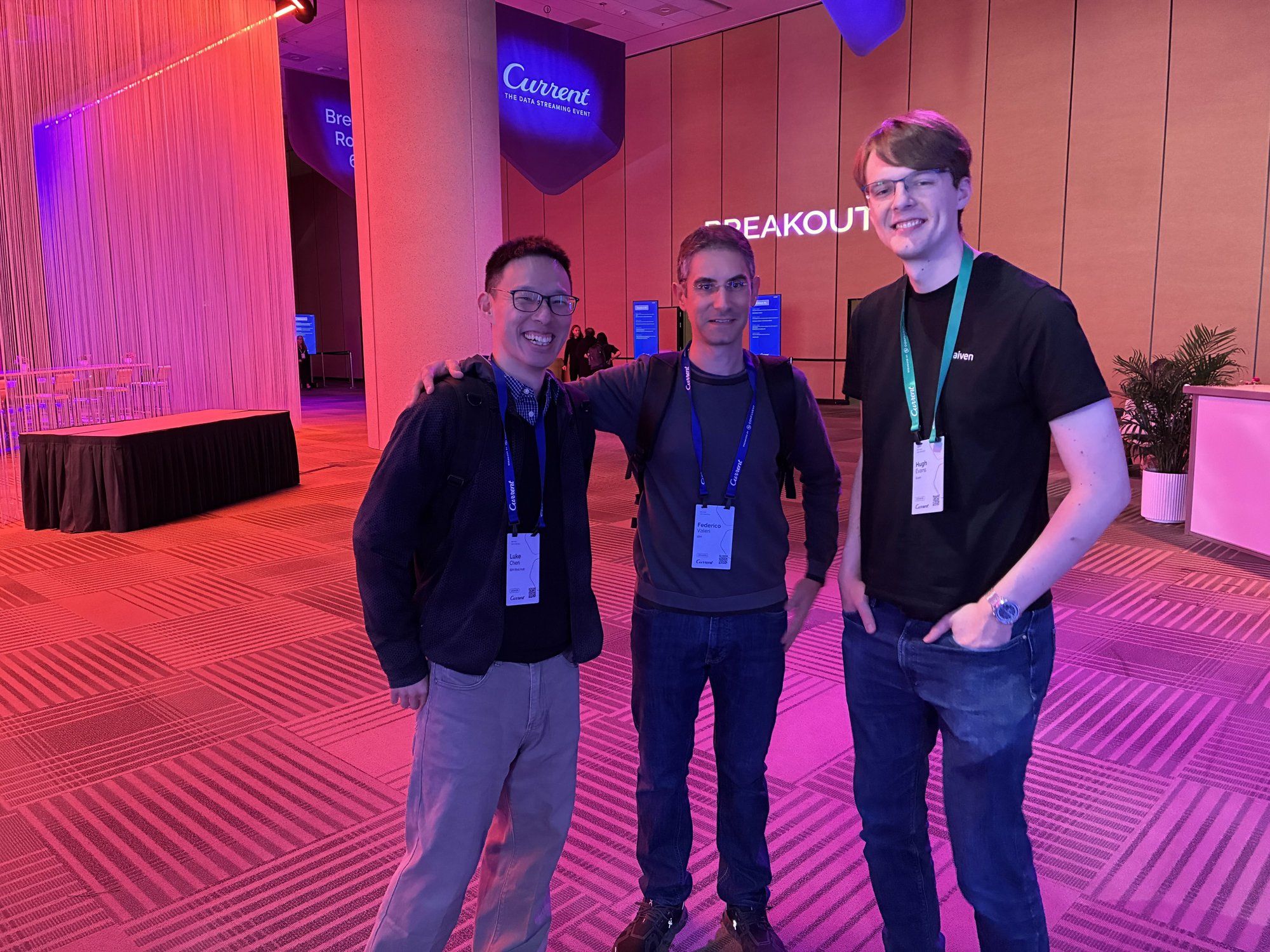
I was really excited to be a Confluent Community Catalyst this year. I'm grateful to Tun Shwe, AI Staff Engineer at Lenses and fellow PyData organiser, for the nomination. It was great to meet the rest of the Catalysts, and I joined some of them for a run (or in my case, a walk) on the Golden Gate Bridge before the event, a great way to start the week.
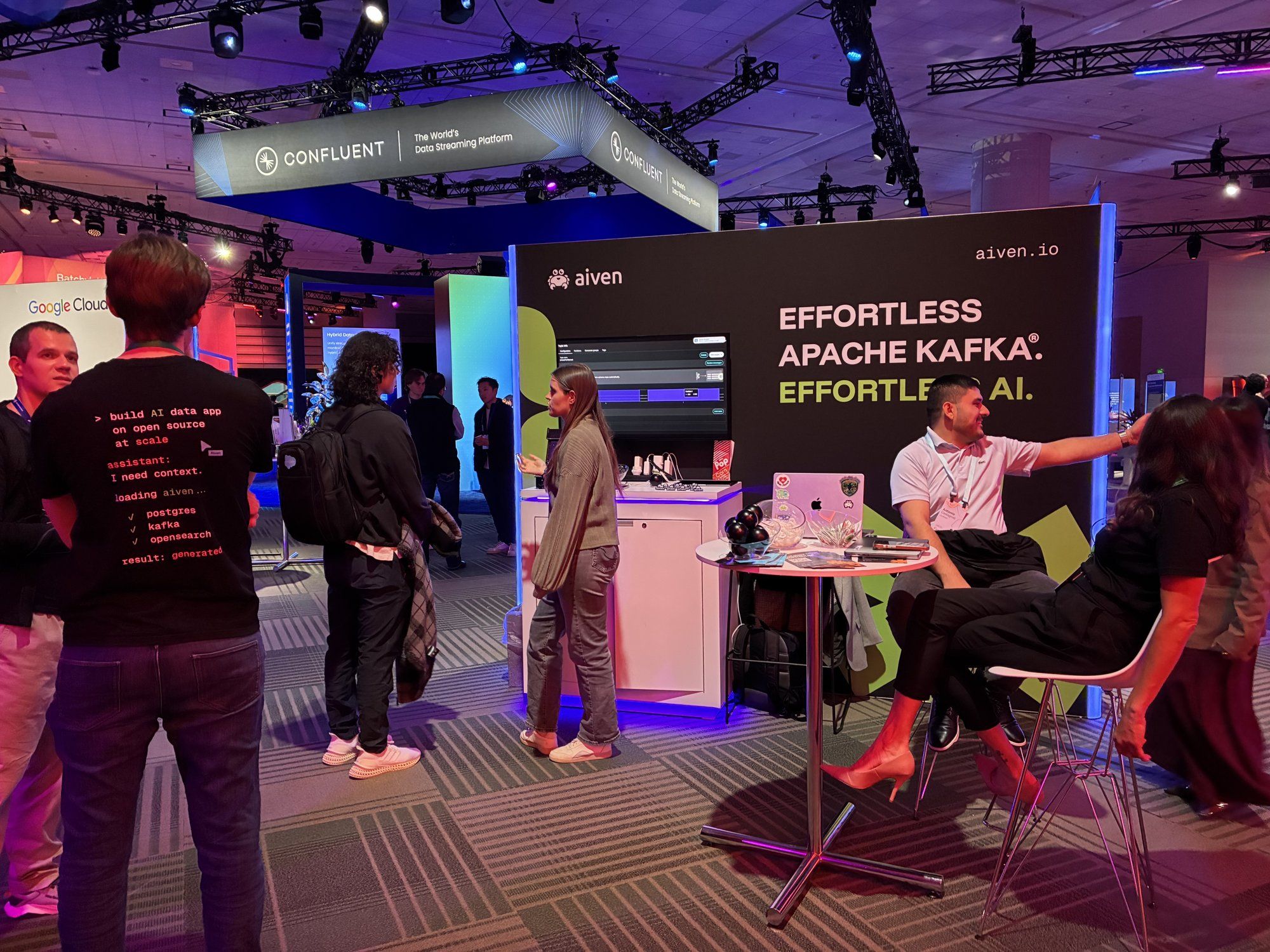
The Confluent keynote had a lot of AI use cases and showcased the new Lightning Tables feature, but it didn't feel like a big step on from last year's keynote in New Orleans. The conversations at the Aiven booth were more grounded, and focused on migration (with excitement building that cross-cluster replication and proxies might finally eliminate the headaches of MirrorMaker), growing adoption of Diskless by enterprises, and StreamHouse. I also listened in on the Flink AMA from the Aiven booth, opposite the meetup hub, and it was great to see committers get the recognition they deserve.
The Current Thing: StreamHouse
StreamHouse came up in several talks this year. It describes architectures that are real-time, production-native and decentralized, and it deliberately leaves the term open for anyone to use. The idea isn't new, and projects like Fluss have been in the works for a while. What changed is that the StreamHouse Working Group, which Aiven co-founded alongside Confluent, Redpanda, StreamNative and Ververica, published a vendor-neutral definition in September, and it prompted a lot of conversation.
Final Thoughts
The StreamHouse announcement consolidated efforts and ideas that already existed, and consolidation and regrouping felt like a theme across the whole event. One of the best talks I saw was from my Aiven colleague Greg Harris, a staff engineer, on best practices for staff engineers implementing Diskless across an organisation. It focused on how to adopt the technical progress we saw last year, which moved at a breathless pace. KIP-1150 was one of the fastest to be accepted, with more work to do on diskless.
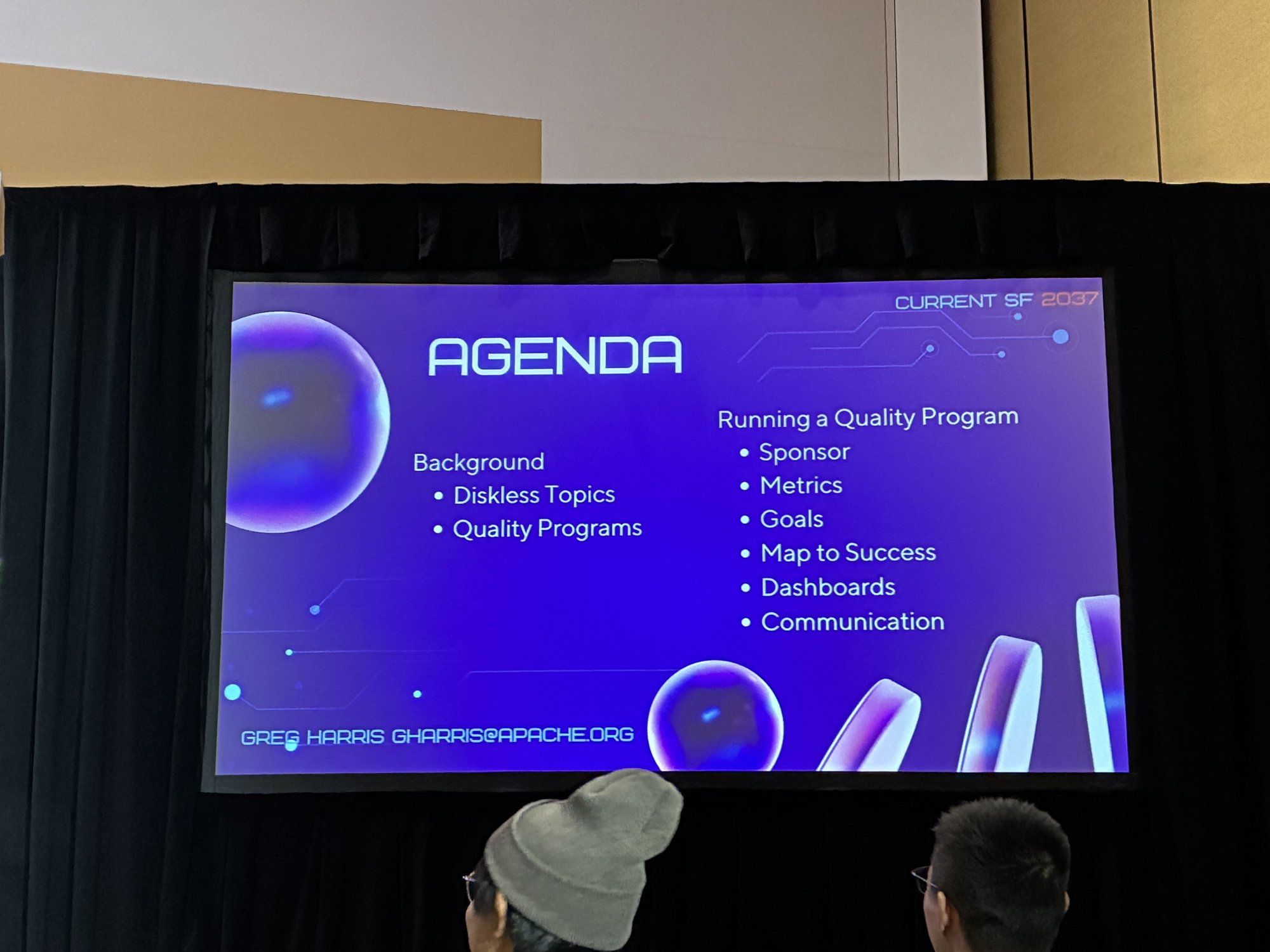
If you run Kafka, the practical question is how to adopt diskless safely: where it fits, what to migrate first, and what still needs work. Greg's talk is the one to watch when the recordings land.
I'm looking forward to watching the recordings of the talks I missed, including Zander Matheson and Tun's talk on PyFlink's missing DataFrame API, and to spending more time with the streaming community. See you there!

Table of contents