


<FORMER CONTRIBUTOR> has said that it’s not worth contributing anymore and maintains their own forks with AI. What’s going to happen to open source as contributors become more insular?

That was the question posed at the Women in Open Source+ Panel I had been asked to moderate. The panelists, from Snowflake, AWS, and NVIDIA, gave similar answers: We have our jobs today because of the community, and I don’t see that changing any time soon.
I felt the same. When I joined Aiven, its direct callout to open source was a deciding factor. Companies across industries stress AI usage today while unsure how they’ll use it in the future or the impact that it will have on their data landscape. That uncertainty, balancing today’s strategies against what comes next, ran through our conversations at All Things Open 2026. For me, that uncertainty settled as the hallway track showed the role open source will play in those decisions.
Data and open source are in a strong position
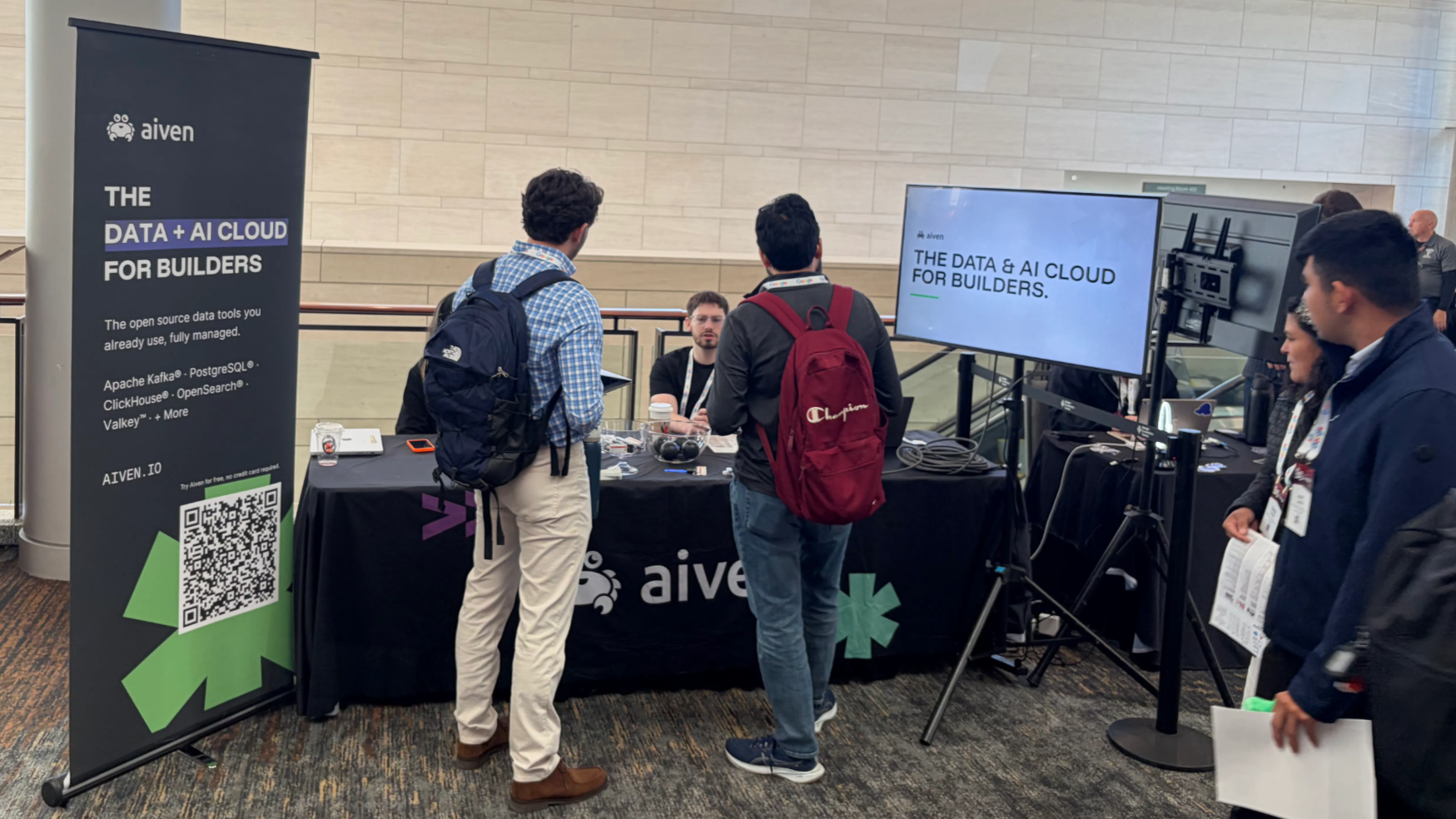
The hallways were full of open source data solutions familiar to Aiven.
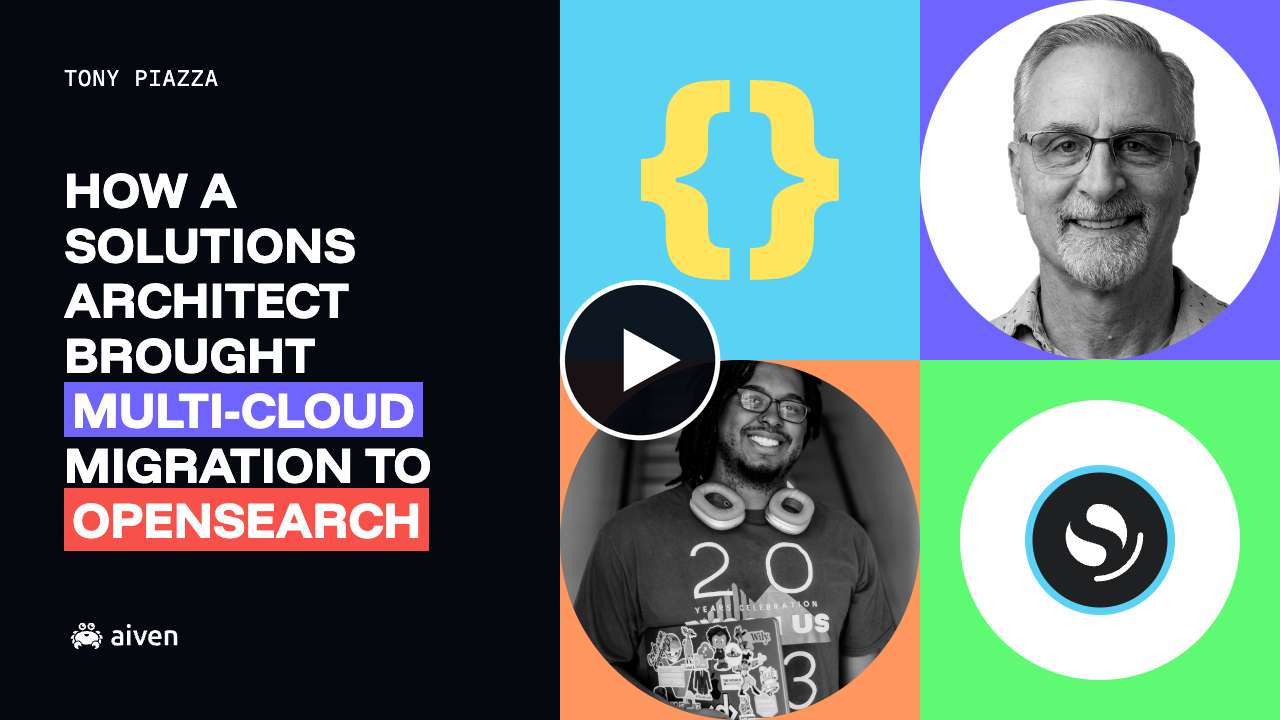
Our friends from Grafana, OpenSearch, PostgreSQL, and Valkey had booths, and many were happy to share that Aiven provides their services. When we spoke, they focused on the people behind the technology over the tech itself. They mentioned contributors like Tony Piazza and Bogdan Petre by name, as contributors and champions, that surfaced bugs and pain points upstream through issues and PRs.
Data and open source are at the forefront of industry and security
My favorite presentation was a 15-minute walk from the venue, at a food hall hosting the Women in Open Source+ Meetup on Day One. There, Madelyn Olson, the Valkey project maintainer, spoke about how the project handles the flood of CVE reports, both real and questionable.
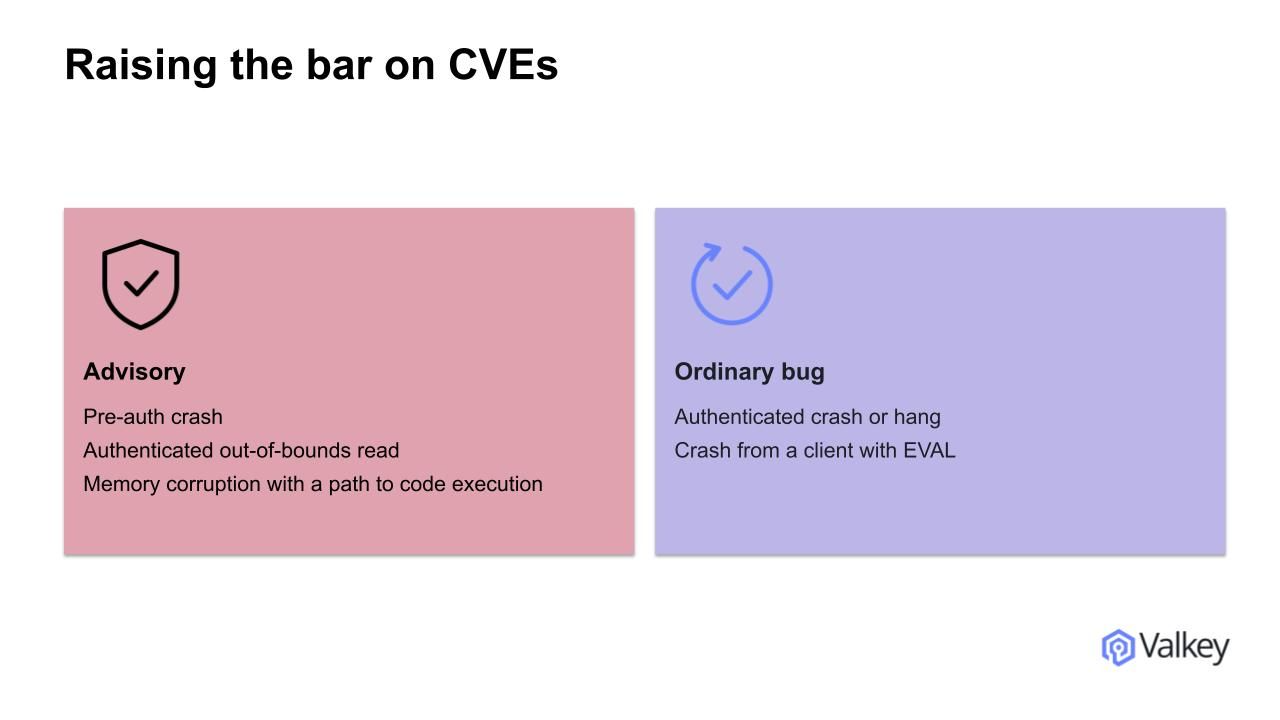
The conversation highlighted Valkey’s work to define CVE status clearly and notify providers sooner, working their way to not having embargoes at all. Olson also explained how cooperation with frontier model providers and vendors that sell Valkey makes this possible. That cooperation is shown through participation in meetings and conferences around the world where these issues are discussed.
Platforms are still grounded in data and data infrastructure
People we spoke to about AI wanted to know how our solution connected to data transfer and data storage solutions, not just their applications. No one asked how to vibe code a solution with Aiven. Instead, they wanted persistent, durable, dependable solutions that would help them build and maintain their products and services.
Representatives from large companies in attendance shared their data storage challenges: more AI means more data to collect, analyze, and store. I thought about all the different solutions we offer. There are tools around governance like Klaw, Karapace, and DataHub. There are infrastructure solutions like Tiered Storage and High Availability. Then there are specialized topics like diskless and iceberg topics. These open-source solutions cut the mental load of managing a large data estate. I take joy in knowing that many of these solutions had Aiven contributing to them.
Those same attendees appreciated being able to combine several Aiven products into a complete data solution in an environment that is easy to use and manage. We handle networking and compliance so they can focus on their data and applications. Our data solutions are the same ones you develop with, not forks. With that, you can develop on your laptop, virtual machine, or agent box, then ship with the help of Aiven’s MCP, CLI, API, or Terraform or Kubernetes Operators.
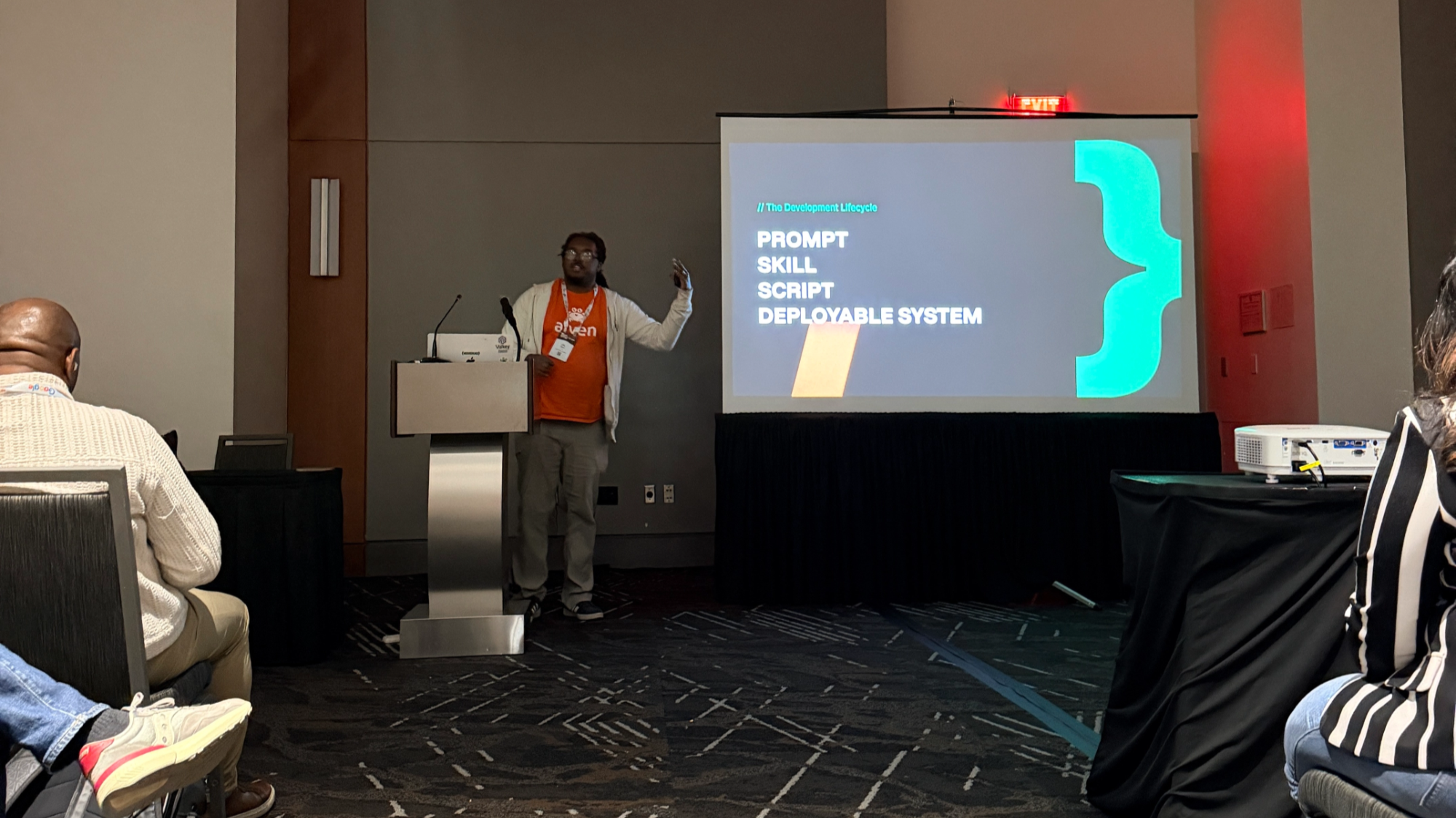
This is where open source becomes more than a technology choice. Builders have room to experiment without making every decision permanent. Start small, learn what your application needs, then decide how and where to run it as those needs change. Aiven supports those decisions across cloud and hardware configurations, with tools that scale as your needs grow. Our OEM partners, such as Akamai, whose booth was two spaces to our right, trust us to help their customers do the same.
People don’t want to make the wrong choice
AI moves faster than people can keep up. Models change, and the leading model can shift from week to week. People have learned that building around a single model or provider is risky, but the alternative means navigating token pricing and managing multiple API keys across vendors.
Aiven’s AI Gateway, powered by LiteLLM, offers the flexibility of multiple models through a single API and key.
The same principle applies to managing agents. If you run an agent on your laptop today, you shouldn’t have to rebuild everything to run it in the cloud tomorrow. Keeping data in durable services, rather than tying it to the agent’s environment, gives you room to change models, frameworks, or infrastructure as you learn what works. The goal is to build something useful without making your next choice harder. As I mentioned in my presentation, Kelsey Hightower’s proposal of Zero Token Architectures treats the LLM as an building tool rather than a runtime dependency, so what you build keeps working when the leading model changes and you avoid depending on a non-deterministic system in production.
We left All Things Open reminded that open source is still at the heart of our technology landscape, and of who we are at Aiven. Thank you to ATO for the opportunity to sponsor, and to everyone who chatted, played games, and learned with us.
